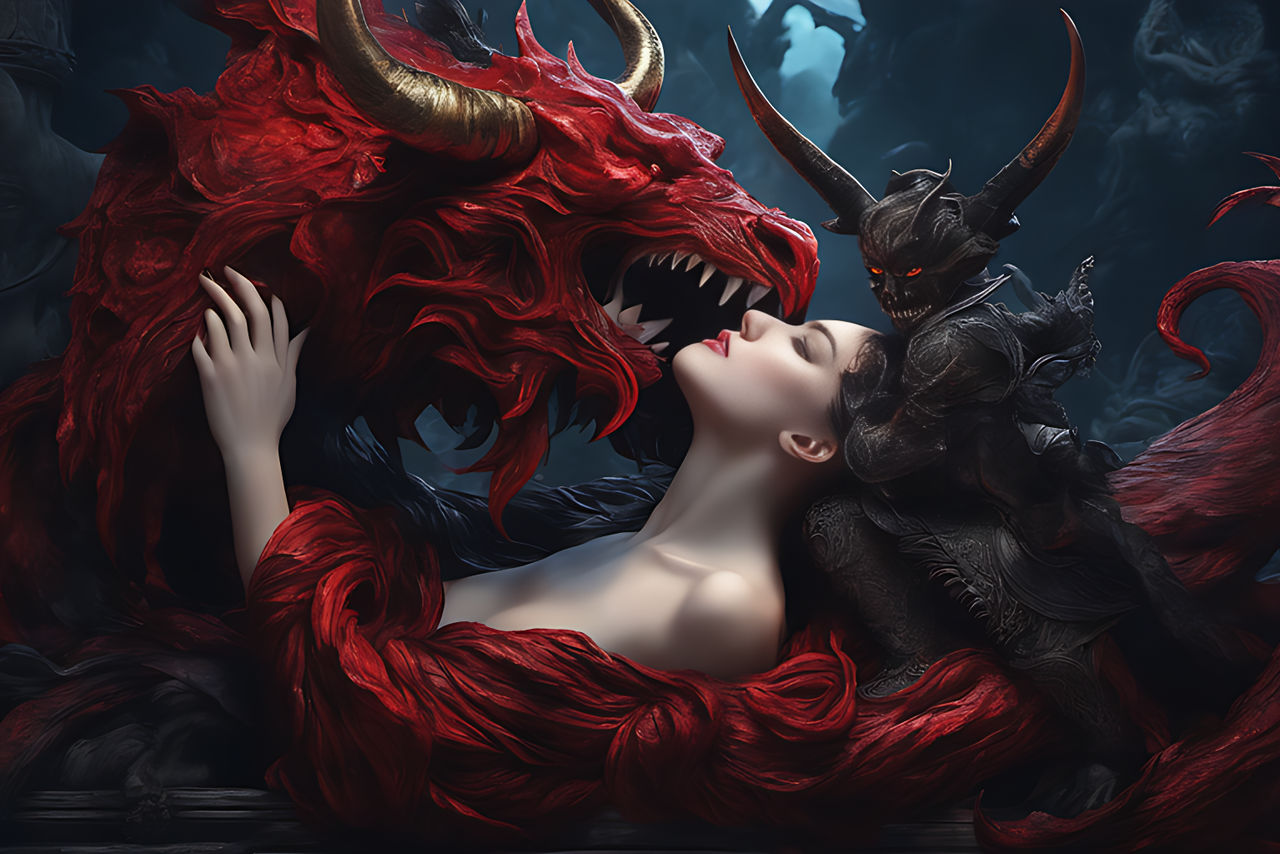
Seduction and Betrayal in Myth: The Demon Lovers

zoharmusic.com – Throughout history, myths have served as a mirror reflecting the deepest fears and desires of humanity. Among these, tales of demon lovers stand out for their exploration of the fine line between seduction and betrayal. These stories, often rooted in folklore and ancient texts, delve into the complexities of human emotion and the consequences of succumbing to forbidden desires.

The Allure of the Demon Lover

The figure of the demon lover embodies the ultimate temptation. They are often depicted as irresistibly attractive, possessing an otherworldly charm that ensnares their victims. This allure is not merely physical; it is a seduction of the soul, promising forbidden knowledge, power, or an escape from the mundane. The demon lover represents the unknown, the forbidden, and the dangerous, making them irresistible to those who seek to transcend the limitations of their existence.

The Dance of Seduction

The seduction by a demon lover is a dance as old as time, one that plays on the deepest desires and vulnerabilities of their prey. It is a dance of shadows and light, where the demon lover appears as a savior, a confidant, or a lover, only to reveal their true nature when it is too late. This seduction is not just a physical act but a psychological one, where the victim is led to question their own reality and desires.

The Betrayal

The betrayal by a demon lover is a pivotal moment in these myths, revealing the true nature of the seducer. It is a moment of realization for the victim, who must face the consequences of their actions. These consequences can vary from physical harm to spiritual damnation, serving as a cautionary tale about the dangers of succumbing to temptation.

Themes and Symbolism

Tales of demon lovers are rich in symbolism, exploring themes of temptation, betrayal, and redemption. They serve as a reminder of the fine line between desire and destruction, urging caution in the face of seduction. These myths also reflect the human condition, highlighting the eternal struggle between good and evil, light and darkness.

Conclusion

The myths of demon lovers continue to captivate and terrify, serving as a timeless reminder of the dangers of unchecked desire. They are a testament to the enduring power of storytelling to explore the complexities of human emotion and the consequences of our actions. As we continue to tell and retell these tales, we are reminded of the thin veil that separates the seductive allure of the unknown from the betrayal that often lies beneath.
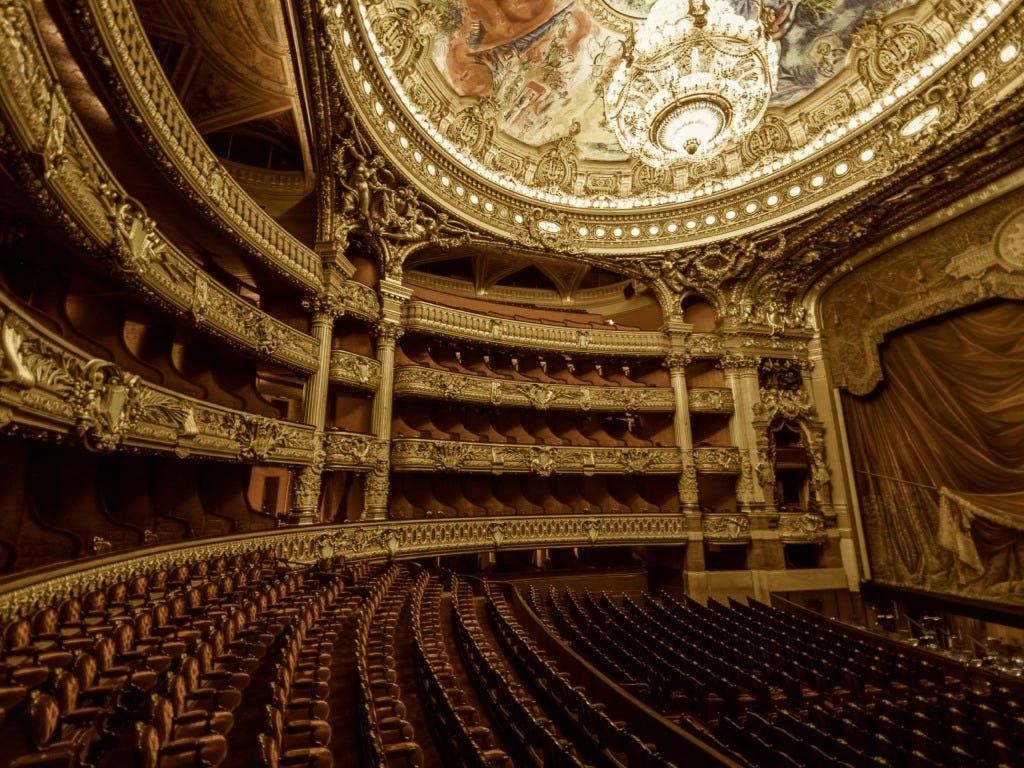
A Haunted Theater Mystery: The Specter of the Opera

zoharmusic.com – Nestled in the heart of a bustling city, the Grand Opera House has stood as a testament to the enduring power of performance and art for over a century. Its grand facade, adorned with intricate carvings and gilded accents, has welcomed countless patrons through its doors. Yet, beneath the glittering chandeliers and plush velvet seats lies a mystery that has captivated and chilled the hearts of those who dare to listen the tale of the Specter of the Opera.

The story begins in the late 19th century, during the golden age of opera, when the Grand Opera House was the epicenter of cultural life. It was a time when the arts were revered, and the opera house was a place of magic, where the world’s most talented singers and musicians came to showcase their art. Among them was a soprano of unparalleled talent, known only as “Madame L.”

Madame L. was the darling of the opera house, her voice a mesmerizing blend of power and purity that could bring audiences to tears. However, her beauty and talent also made her the object of obsession for a mysterious figure known only as “The Phantom.” This shadowy character, who was said to dwell in the hidden recesses of the opera house, was rumored to be a disfigured musical genius who had once been a composer for the theater.

The Phantom’s love for Madame L. was deep and dark, and he would often leave her gifts and notes, professing his undying devotion. But his affection was not to be, for Madame L. was engaged to the wealthy and handsome Vicomte de Chagny. As the opening night of the season’s most anticipated opera approached, the tension between the Phantom and Madame L. reached its zenith.

On the fateful night, as Madame L. took to the stage, a hush fell over the audience. But as she began to sing, a chilling sound echoed through the opera house—the haunting melody of the Phantom’s own composition, a requiem for his lost love. The performance was halted, and the opera house was thrown into chaos. When order was finally restored, Madame L. was nowhere to be found, and the Phantom had vanished into the night.

From that day forward, the Grand Opera House was said to be haunted by the Specter of the Opera. Patrons and performers alike reported hearing the eerie strains of the Phantom’s requiem, and some even claimed to have seen the ghostly figure of Madame L. wandering the corridors, forever searching for her lost love.

The mystery of the Specter of the Opera has become a part of the opera house’s lore, a tale told to every new generation of performers and patrons. Some say the Phantom still dwells within the walls of the theater, forever bound to the stage that was his home and the love that he could never possess.

Over the years, the Grand Opera House has undergone many renovations, yet the presence of the Specter remains. It is said that on quiet nights, when the opera house is empty, one can still hear the faint sounds of a soprano’s voice, singing a melody that seems to come from another world.

The Specter of the Opera is a haunting reminder of the power of love and obsession, and the enduring legacy of art. It is a mystery that continues to captivate and intrigue, a ghost story that is as much a part of the opera house as the performances that take place on its stage. And so, the legend lives on, a spectral presence that adds an extra layer of magic—and perhaps a touch of fear—to every performance at the Grand Opera House.

The Mysterious Nazca Lines of Peru: Unraveling the Enigma

zoharmusic.com – Nestled in the arid plains of the Peruvian coastal region, the Nazca Lines stand as one of the world’s most enduring and perplexing archaeological mysteries. These ancient geoglyphs, etched into the earth over 2,000 years ago, have fascinated explorers, archaeologists, and enthusiasts for centuries, sparking a myriad of theories about their creation, purpose, and the civilization responsible for them.

The Nazca Lines consist of hundreds of individual designs, ranging from simple lines and geometric shapes to complex figures of animals, plants, and mythical creatures. The largest of these figures span hundreds of meters, and the precision and scale of the designs suggest a sophisticated understanding of geometry and spatial planning. The most iconic figures include a hummingbird, a monkey, a spider, and a whale, among others.

The creation of the Nazca Lines is attributed to the Nazca culture, which thrived in the region between 100 BCE and 800 CE. The Nazca people were skilled farmers who developed an intricate system of irrigation canals to support their agriculture in the otherwise barren desert. However, the purpose behind the lines remains a subject of intense debate.

One of the most popular theories suggests that the lines served as an astronomical calendar, with certain lines and figures aligned with the solstices and equinoxes. Others propose that they were used for rituals or as a form of ancestor worship, with the figures representing deities or important figures in Nazca mythology.

The most controversial theories come from those who believe the lines were created with the assistance of extraterrestrial beings. Proponents of this theory point to the sheer scale and precision of the designs, arguing that they could only have been created with the aid of advanced technology not available to ancient civilizations. However, this theory is largely dismissed by the scientific community.

The Nazca Lines were only discovered in the early 20th century when seen from the air, revealing their true scale and complexity. Today, they are a UNESCO World Heritage Site and are protected from vandalism and erosion. Visitors can explore the lines from a viewing tower or take a flight over the desert to witness the geoglyphs from above, much like the ancient creators may have envisioned.

Despite the ongoing research and speculation, the Nazca Lines continue to hold their secrets. The Nazca culture left no written records explaining the purpose of their creations, leaving us to ponder the mysteries of these ancient people. What inspired them to etch these massive designs into the earth? What rituals or beliefs did they represent? And how did they manage such a feat without the aid of modern technology?

The Nazca Lines are a testament to the ingenuity and mystery of ancient civilizations. They remind us of the depth of human creativity and the enduring power of art and culture to transcend time. As we continue to study these enigmatic lines, we may one day uncover the secrets they hold, but for now, they remain a captivating enigma in the sands of time.